

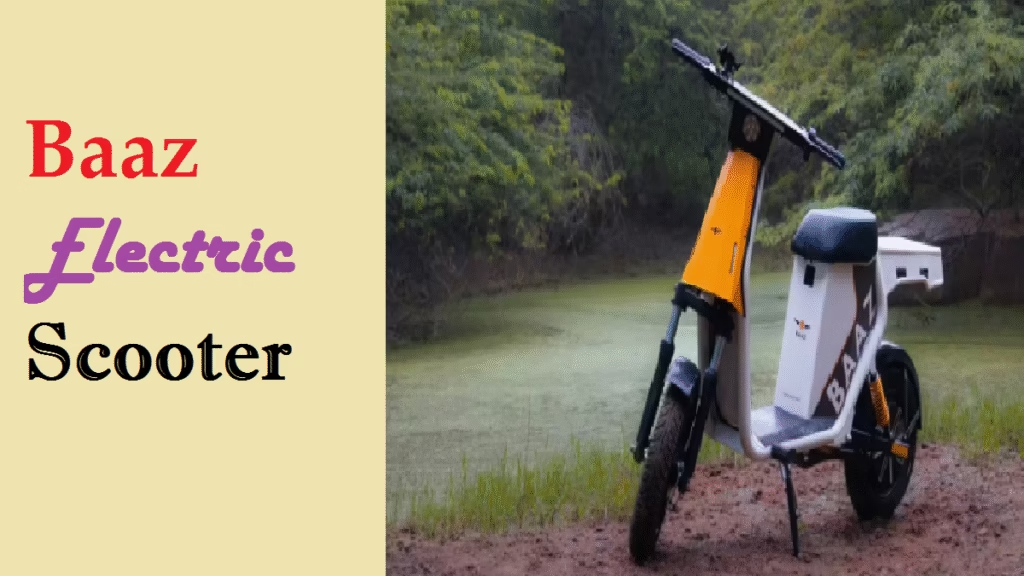
If you are looking for a simple electric scooter for delivery work, the Baaz electric scooter is an interesting option because it was designed around the daily needs of gig and delivery riders. Unlike many electric scooters that focus mainly on personal commuting, Baaz was developed with low running cost, battery swapping and long daily usage in mind.
One of the biggest differences is its battery-swapping system. Instead of waiting for the battery to charge, a rider can use a charged Energy Pod and continue riding. This makes the concept particularly useful for riders who spend several hours on the road every day.
Why Was the Baaz Electric Scooter Designed for Delivery Riders?
Delivery riders usually have different requirements from regular private scooter users.
A normal commuter may travel 30–50 km in a day and can charge the scooter overnight. A delivery rider may need to travel much more and may not have enough time to wait for a battery to charge.
Baaz tried to solve this problem by separating the scooter from the battery and creating a battery-swapping ecosystem.
The scooter was launched at an introductory ex-showroom price of around ₹35,000 without the battery. The lower upfront price was possible because the battery was separated from the vehicle cost.
This approach makes the Baaz concept very different from a conventional electric scooter.
Baaz Electric Scooter Key Specifications
| Specification | Baaz Electric Scooter |
|---|---|
| Scooter type | Low-speed electric scooter |
| Top speed | 25 km/h |
| Battery type | Swappable Energy Pod |
| Battery capacity | 1.028 kWh / 1028 Wh |
| Battery weight | About 8.2 kg |
| Claimed daily usage | 100+ km |
| Battery protection | IP68 |
| Suspension | Hydraulic front suspension |
| Rear suspension | Dual shock absorbers |
| Battery system | Swappable |
| Target users | Gig and delivery riders |
| Vehicle price at launch | Around ₹35,000 without battery |
The 25 km/h top speed is one of the most important characteristics of the Baaz. It is not intended to compete directly with faster electric scooters such as the Ather 450 series, TVS iQube or other high-speed models.
Instead, the scooter focuses on low-speed urban delivery and short-distance commercial mobility.
Baaz Battery and Energy Pod Explained
The battery is one of the most interesting parts of the Baaz electric scooter.
Baaz uses a removable Energy Pod instead of a conventional permanently installed battery. The Energy Pod was reported with a 1028 Wh energy capacity and approximately 8.2 kg weight.
The battery pack uses lithium-ion cells and an aluminium casing. It was also designed with IP68 protection, which is important for a vehicle that may be used outdoors in different weather conditions.
For a delivery rider, the main advantage is not simply battery capacity.
The bigger advantage is battery swapping.
How Does Baaz Battery Swapping Work?
The basic idea is simple.
A rider arrives at a battery-swapping point with a depleted Energy Pod. The depleted battery can be exchanged for a charged one. The rider can then continue the journey instead of waiting for a conventional charging cycle.
This is especially useful for delivery riders.
Imagine a rider working for eight or ten hours.
With a conventional electric scooter, the rider has to plan charging around the working schedule. If the battery becomes low during peak delivery hours, charging can reduce the number of deliveries that can be completed.
With a swapping model, the rider can potentially replace the depleted battery and get back on the road much faster.
Baaz’s original ecosystem included an automated battery-swapping network intended to support this type of usage.
What Is the Baaz Electric Scooter Range?
Baaz was designed for more than 100 km of daily usage, but buyers should understand the difference between a claimed figure and real-world riding.
Real range depends on:
- Rider weight
- Road conditions
- Traffic
- Number of stops
- Acceleration
- Tyre pressure
- Weather
- Load carried by the scooter
- Battery condition
Delivery riding can be particularly demanding because the scooter may repeatedly accelerate, stop and start throughout the day.
Therefore, it is better to consider the advertised range as a reference rather than expecting exactly the same distance in every situation.
The battery-swapping system is actually more important for delivery riders than simply having a large claimed range.
Is Baaz Good for Food Delivery?
Baaz can make sense for a delivery rider whose work is mainly inside an urban area and who does not need high-speed highway performance.
The scooter’s low-speed design is suited to city movement, while the swappable battery concept can reduce downtime.
For example, a delivery rider may spend the day moving between restaurants, shops, apartments and customers. In this type of work, quick access to energy can be more useful than a very high top speed.
However, riders should check the availability of the required battery-swapping infrastructure before choosing the scooter.
That is extremely important.
A swappable battery scooter is most useful when swapping stations are conveniently located along the rider’s regular routes.
Baaz Electric Scooter for Zomato and Swiggy Delivery
Delivery riders working for platforms such as Zomato or Swiggy generally need a vehicle that is economical to operate throughout the day.
The Baaz concept is interesting because it focuses specifically on gig mobility.
But there is an important point to understand.
The scooter’s 25 km/h top speed makes it a very different product from mainstream high-speed electric scooters.
If your delivery work involves mostly crowded city roads, short trips and frequent stops, the low-speed configuration may be acceptable.
If you regularly travel on faster roads or need to cover long distances quickly, a higher-speed electric scooter may be more suitable.
Baaz Electric Scooter Running Cost
Electric scooters generally have an advantage over petrol scooters because electricity can cost less per kilometre than petrol.
However, the Baaz ownership model needs to be considered differently because its battery and swapping ecosystem are separate from a conventional scooter purchase.
The actual daily cost can depend on how the battery service is provided, how frequently the rider swaps batteries and the applicable battery usage or rental arrangement.
Therefore, buyers should not calculate the cost only from the ₹35,000 scooter price.
The total cost should include:
Scooter cost + battery service cost + swapping cost + maintenance + insurance + other operating expenses.
This is particularly important for commercial riders because the scooter is being used to generate income.
Is the ₹35,000 Baaz Price the Final Price?
No.
The commonly reported ₹35,000 launch price referred to the scooter without the battery.
This is an important point that many readers can misunderstand.
Baaz separated the battery from the scooter price to reduce the initial vehicle cost. The battery was intended to be provided through the company’s ecosystem rather than being included as a normal purchased battery in the scooter’s upfront price.
So, anyone considering a Baaz should look at the complete usage cost, not just the headline scooter price.
Baaz vs Normal Electric Scooter
The biggest difference is the ownership philosophy.
A normal electric scooter generally includes the battery as part of the vehicle package.
Baaz was designed around a different model where the scooter and battery ecosystem are separated.
| Feature | Baaz | Conventional Electric Scooter |
|---|---|---|
| Main purpose | Delivery/gig mobility | Personal commuting |
| Top speed | 25 km/h | Usually higher |
| Battery | Swappable Energy Pod | Usually fixed/removable depending on model |
| Charging | Battery swapping ecosystem | Plug-in charging |
| Upfront vehicle cost | Lower without battery | Usually includes battery |
| Best use | Urban delivery | Personal and family use |
| Long-distance riding | Limited by low speed | Better with high-speed models |
| Battery downtime | Reduced with swapping | Depends on charging speed |
Advantages of Baaz Electric Scooter
1. Battery Swapping
This is the biggest advantage.
A delivery rider can potentially avoid long charging downtime by swapping the battery.
2. Low Initial Scooter Price
The scooter was launched at around ₹35,000 without the battery, making the initial vehicle cost much lower than many conventional electric scooters.
3. Designed for Gig Workers
Baaz was developed specifically with gig and delivery riders in mind.
4. Simple Urban Mobility
The low-speed configuration can work well for short urban trips and congested areas.
5. Protected Battery Pack
The Energy Pod was reported with IP68 protection, which is useful for everyday outdoor usage.
Disadvantages of Baaz
The Baaz concept also has limitations.
Low Top Speed
At 25 km/h, it is considerably slower than mainstream high-speed electric scooters.
Swapping Network Is Important
The biggest limitation of a battery-swapping scooter is infrastructure.
If a rider cannot easily find a compatible swapping point, the main advantage of the scooter becomes less useful.
Not Ideal for Every Rider
A person looking for a family electric scooter for highway-like roads or longer journeys should consider a faster model.
Total Cost Needs Careful Calculation
The low scooter price does not represent the complete cost of operating the vehicle because the battery is separated from the vehicle price.
Is Baaz Better Than a Petrol Scooter for Delivery?
For the right type of rider, an electric scooter can reduce energy costs and maintenance requirements compared with a petrol scooter.
But the answer depends on daily distance and charging or swapping availability.
For example, a rider travelling only a short distance every day may not gain enough benefit from a dedicated swapping ecosystem.
A rider covering many kilometres every day can potentially benefit much more because reducing energy and downtime becomes more important.
Who Should Consider the Baaz Electric Scooter?
Baaz makes the most sense for:
- Food delivery riders
- Gig workers
- Local delivery businesses
- Courier riders
- Small commercial fleets
- Riders travelling mainly inside cities
- Riders who have access to battery-swapping infrastructure
- Users who value low initial vehicle cost
Who Should Avoid the Baaz?
Baaz may not be the right choice if you:
- Need speeds above 25 km/h
- Frequently travel on faster roads
- Want a family-focused electric scooter
- Want to travel long distances between cities
- Do not have access to battery-swapping infrastructure
- Prefer owning the battery outright
- Want a conventional private electric scooter
Is Baaz Electric Scooter Worth Buying?
The answer depends mainly on your usage.
For a delivery rider, Baaz’s most attractive feature is not its low price alone. The real attraction is the combination of low-speed urban mobility and battery swapping.
If the swapping network is available where you work and the battery-service cost fits your daily income, the concept can be useful.
But if swapping stations are unavailable in your area, buying a conventional electric scooter with a larger battery may make more sense.
This is why riders should calculate their daily route before choosing the vehicle.
Baaz Electric Scooter: Final Verdict
The Baaz electric scooter is a different type of electric two-wheeler.
It was not created to compete directly with premium electric scooters. Instead, its focus was on gig workers, delivery riders, low operating costs and battery swapping.
Its 25 km/h top speed limits its use compared with faster electric scooters, but that is also part of its intended urban-delivery positioning.
The 1028 Wh Energy Pod and battery-swapping concept make the scooter particularly interesting for riders who spend long hours working in the city.
The most important thing to check before choosing Baaz is not simply the scooter price.
Check the availability of battery-swapping infrastructure and calculate your complete daily operating cost.
If those two factors work in your favour, Baaz can be an interesting solution for urban delivery work. If they do not, a conventional electric scooter may provide a more practical ownership experience.
Frequently Asked Questions
What is the Baaz electric scooter?
Baaz is a low-speed electric scooter developed with a strong focus on gig workers and delivery applications.
What is the top speed of Baaz?
The reported top speed is 25 km/h.
What is the Baaz scooter battery capacity?
The Energy Pod has been reported with an energy capacity of 1028 Wh, or approximately 1.028 kWh.
Does Baaz have a removable battery?
Yes. Its Energy Pod was designed as a swappable battery system.
What was the Baaz electric scooter price?
Baaz was launched at around ₹35,000 ex-showroom for the scooter without the battery.
Is Baaz suitable for delivery riders?
Yes. The scooter was specifically developed around gig and delivery mobility requirements.
Does Baaz need charging?
The Energy Pod needs to be charged, but the battery-swapping ecosystem is intended to allow riders to exchange a depleted battery for a charged one instead of waiting for conventional charging.
Is Baaz a high-speed electric scooter?
No. Its reported top speed is 25 km/h, so it belongs to the low-speed category.
Is Baaz good for city delivery?
It can be suitable for urban delivery when compatible battery-swapping infrastructure is available.
Should you buy Baaz for personal family use?
For normal family commuting, a conventional electric scooter may be more practical because Baaz was primarily designed around gig and delivery use.
Final Word
The Baaz electric scooter is an example of how electric mobility can be designed around a specific job instead of simply replacing a petrol scooter.
For delivery riders, every minute and every kilometre matter. Battery swapping can reduce charging downtime, while the low-speed design keeps the scooter focused on urban mobility.
However, the battery ecosystem is the key factor.
Before choosing Baaz, check whether compatible swapping facilities are available on your daily delivery routes and calculate the complete battery-service cost.
For the right rider and the right city, that can make Baaz an interesting electric mobility solution.