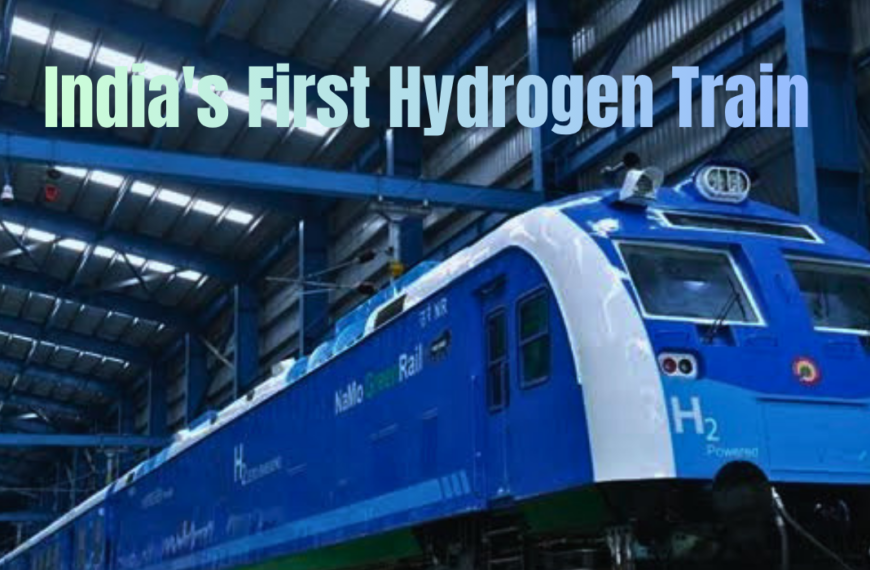
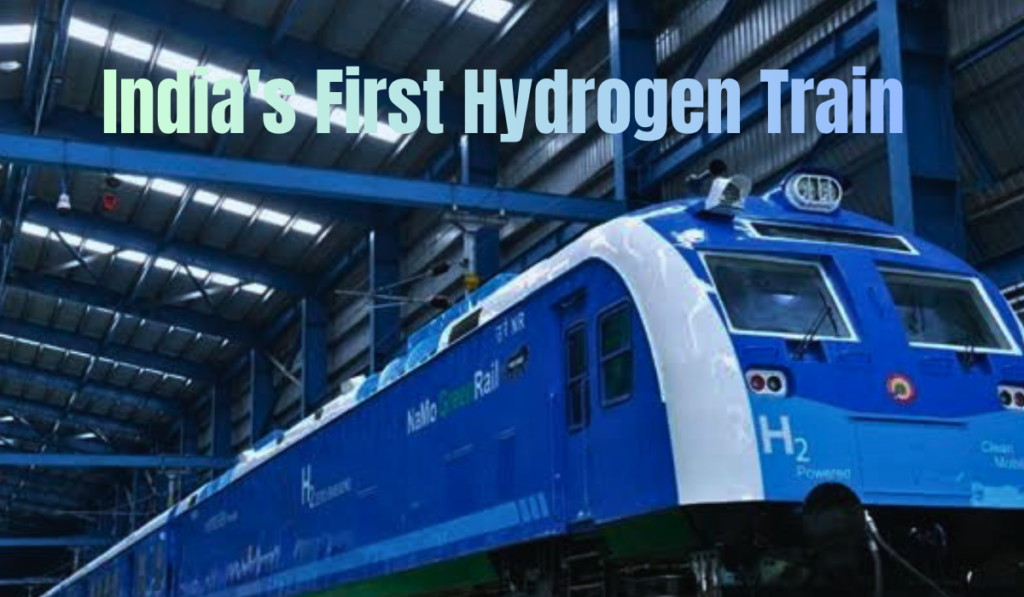
On 17 july 2026 Our honorable Prime minister Narendra Modi Flagship India’s first Hydrogen train with 75 km/hr Top Speed Good news for india and lead in global green energy, Train name is Namo Green Rail.
Namo Green Rail in Travel 89 km with Jind to Sonipat in Haryana, approx timing 2 hr.
The journey start in 2023, Indian railway announce to introduce hydrogen fuel cell technology, on selected short distance, as a part of reduce emissions and go green energy.
Hydrogen Cell Fuel – How it’s Work?
In the first stage hydrogen stored in high pressure fuel tank, now in fuel sells first Hydrogen Cell enter then after surrounding air oxygen enter in fuel cells
Electricity Generate
2H₂ + O₂ → 2H₂O + Electricity + Heat
In Fuel cells hydrogen and oxygen together generation electricity, produce heat and water show as above formula.
Now generated electricity powers an electric traction motor, which drives the train.
Now also here battery storage available these is work for existing electricity storage and provides extra power during acceleration and stores energy recovered during braking.
Comparison Of Hydrogen Train vs Diesel Train
| Feature | Hydrogen Train | Diesel Train |
|---|---|---|
| Energy Source | Hydrogen (H₂) fuel | Diesel fuel |
| Working Principle | Fuel cell generates electricity to power electric motors | Diesel engine directly powers the train |
| Emissions | Water vapor (H₂O) and heat | Carbon dioxide (CO₂), nitrogen oxides (NOₓ), and particulate matter |
| Environmental Impact | Zero tailpipe carbon emissions | High greenhouse gas emissions |
| Noise Level | Quiet operation | Louder engine noise |
| Vibration | Low | Higher due to engine operation |
| Fuel Efficiency | More energy-efficient than diesel in many operating conditions | Lower efficiency due to heat loss in combustion |
| Maintenance | Fuel cells and electric motors generally require less routine maintenance | Regular engine, oil, and transmission maintenance required |
| Operating Cost | Can be lower over time if green hydrogen is affordable | Depends on diesel prices, which can fluctuate |
| Initial Cost | Higher because of fuel cell technology and hydrogen storage | Lower than hydrogen trains |
| Refueling Time | Typically around 15–30 minutes (depending on the system) | Around 10–20 minutes |
| Infrastructure | Requires hydrogen production and refueling stations | Existing diesel refueling infrastructure is widely available |
| Best Use | Non electrified routes seeking lower emissions | Routes where diesel infrastructure already exists |