
Electric scooters are no longer only for young riders. Many parents and senior citizens are now looking for a simple electric scooter for market visits, morning rides, temple visits, short office trips, family work and everyday city travel.
But choosing an electric scooter for an older rider is different from choosing one for a performance-focused rider.
A senior rider may not need the fastest acceleration or the highest top speed. Instead, easy handling, comfortable seating, good balance, predictable braking, simple controls and easy foot placement can be much more important.
A scooter that feels exciting to a young rider may not necessarily be the best choice for a parent.
In this guide, we look at the things that matter most and compare some practical electric scooters that can suit parents and senior citizens in India.
Quick Answer: Which Electric Scooter Is Best for Senior Citizens?
For most parents and senior citizens, I would shortlist these scooters:
| Scooter | Best For | Why Consider It? |
|---|---|---|
| Bajaj Chetak C2501 | Easy handling | Lower seat, lower weight and simple controls |
| TVS iQube | Overall family use | Comfortable riding position and practical design |
| Ather Rizta | Maximum comfort | Large seat, stable feel and useful storage |
| Bajaj Chetak C3001 | Balanced choice | Comfortable city riding with useful range |
| VIDA VX2 | Flexible charging | Removable battery option |
| Bajaj Chetak C3503 | Premium everyday use | Good range and solid construction |
My simple recommendation:
- For an older rider who wants an easy-to-handle scooter, look at the Chetak C2501.
- For parents who often carry a pillion, the Ather Rizta is worth considering.
- For an all-round family scooter, the TVS iQube is a strong option.
- For someone who needs removable batteries, consider the VIDA VX2.
The right choice ultimately depends on the rider’s height, strength, daily distance and comfort level.
What Makes an Electric Scooter Good for Senior Citizens?
Before looking at individual scooters, it is important to understand what an older rider actually needs.
A good senior-friendly electric scooter should ideally have:
- Easy foot placement
- Comfortable seat
- Manageable weight
- Smooth acceleration
- Good low-speed control
- Easy-to-use brakes
- Stable handling
- Good visibility
- Reverse mode
- Comfortable suspension
- Useful ground clearance
- Simple controls
- Good tyre grip
- Easy charging
- Reliable service support
These features may sound simple, but they can make a big difference during everyday riding.
1. Bajaj Chetak C2501 – Best Easy-to-Handle Option
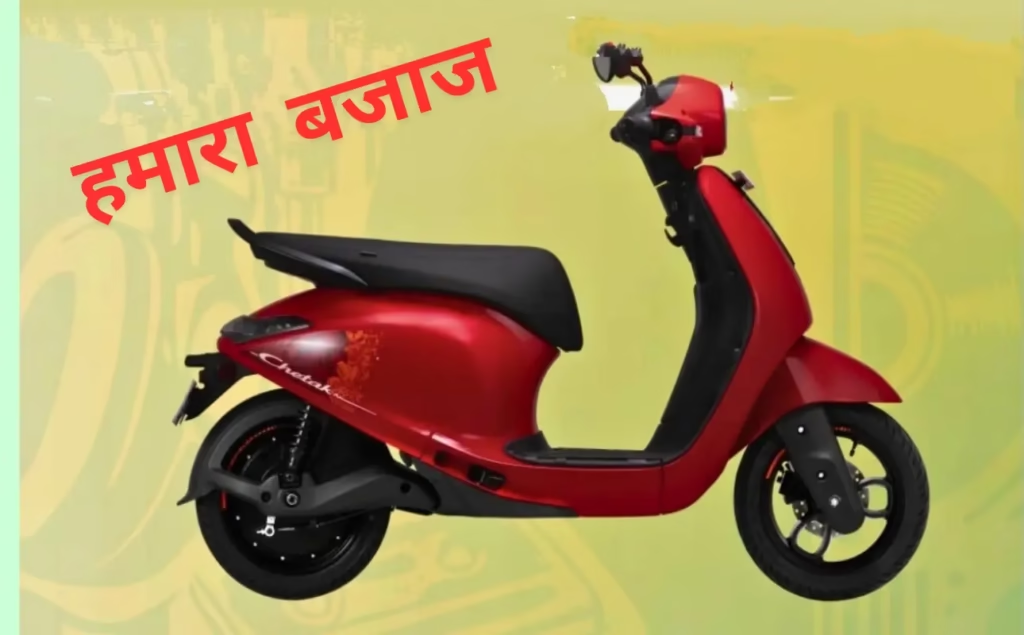
If your main priority is easy handling, the Bajaj Chetak C2501 deserves serious consideration.
One of its biggest advantages for older riders is its relatively low seat height and manageable weight.
The C2501 has a 763 mm seat height and a kerb weight of around 107 kg. This combination can make it easier for a rider to place their feet on the ground and move the scooter while parking.
It also has a relatively modest top speed, which is not necessarily a disadvantage for a senior rider.
For someone mainly travelling around the neighbourhood, a lower top speed can actually encourage calmer riding.
Why C2501 Can Be Good for Parents
- Lower seat height
- Relatively light
- Easy to manoeuvre
- Reverse mode
- Simple riding experience
- Good ground clearance
- Comfortable city speed
- Useful under-seat storage
- Suitable for short daily trips
The lower seat is particularly useful when stopping at traffic signals.
An older rider may feel more confident when both feet can be placed closer to the ground.
Best for
Parents and senior citizens who want a simple and manageable electric scooter for city use.
2. TVS iQube – Best Overall Family Choice

The TVS iQube is one of the more practical choices for a family.
Its conventional scooter design makes it familiar to people who have previously used petrol scooters.
The riding position is upright, and the scooter has a wide seat and useful footboard space.
The iQube range includes different battery options, so buyers can choose according to their daily travel requirement.
For example, the 2.2 kWh version has a claimed IDC range of 94 km, while larger battery versions offer higher claimed figures. The important thing is not to choose the biggest battery automatically. Select a version that matches the rider’s daily distance.
Why iQube Can Be Good for Senior Riders
- Familiar scooter design
- Upright riding position
- Comfortable seat
- Easy city riding
- Reverse/parking assistance
- Good ground clearance
- Tubeless tyres
- Smooth acceleration
- Multiple battery options
- Practical storage
The iQube’s 770 mm seat height is also within a range that many riders can manage comfortably.
Its weight changes with the battery version, so older riders should test the exact variant they plan to buy.
Best for
Parents who want a comfortable, familiar and practical family scooter.
3. Ather Rizta – Best for Comfort and Pillion Riding
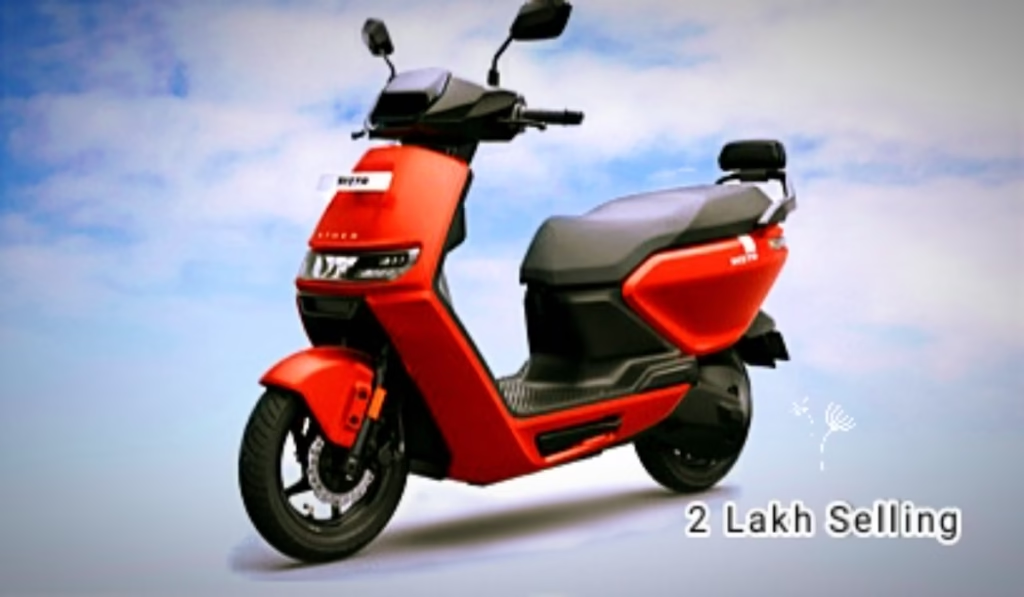
The Ather Rizta is particularly interesting for families because it focuses heavily on comfort and practicality.
It has a large seat and a relaxed riding position.
If your father or mother frequently rides with a spouse or another family member, the Rizta can make more sense than a sporty electric scooter.
The scooter has a 780 mm seat height, around 125 kg kerb weight, 34 litres of boot space and 15 cm of ground clearance.
The weight is higher than some lighter scooters, so a senior rider should definitely take a test ride before buying.
Why Rizta Can Be Good for Parents
- Large seat
- Comfortable riding position
- Good pillion space
- Pillion grab handle
- Pillion backrest availability
- Large boot space
- Stable road behaviour
- Reverse mode
- Good suspension setup
- Family-focused design
The large seat is one of its biggest advantages.
For parents who sometimes carry a spouse, child or small amount of luggage, this extra space can be more useful than having a very high top speed.
Best for
Families and senior riders who give high priority to comfort and pillion space.
4. Bajaj Chetak C3001 – Balanced Choice
The Chetak C3001 sits between the basic C2501 and larger Chetak options.
It can be a good choice for parents who want a little more range and equipment without moving to a heavier or more performance-focused scooter.
The C3001 has a 775 mm seat height and a 3.0 kWh battery.
It is designed primarily for everyday urban use.
Why Consider C3001?
- Comfortable scooter design
- Good city range
- Reverse mode
- Practical storage
- Smooth riding experience
- Familiar controls
- Good build feel
- Suitable for regular commuting
The main point to remember is that the C3001 is slightly taller and heavier than the C2501.
Therefore, if the rider is short or has difficulty handling a heavier scooter, the C2501 may be easier.
Best for
Parents who want a balanced combination of range, comfort and everyday practicality.
5. VIDA VX2 – Best for Removable Battery Convenience
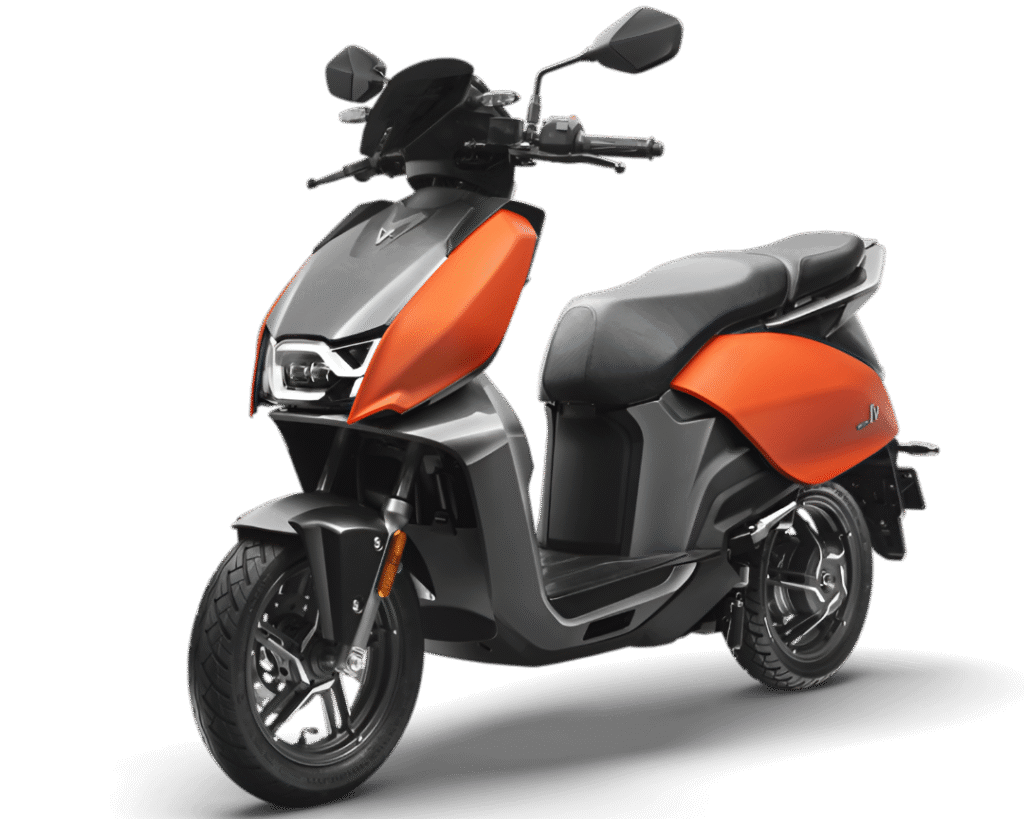
The VIDA VX2 is different from the other scooters on this list because its removable battery setup can be useful for some households.
This is especially helpful when the rider does not have a convenient charging socket near the parking area.
Instead of bringing the entire scooter close to the charging point, the battery can be removed according to the manufacturer’s procedure and charged separately.
The VX2 variants use removable batteries and have a seat height of around 777 mm.
Why It Can Be Useful for Parents
- Removable battery
- Flexible charging
- Useful for homes without parking sockets
- Good city-focused design
- Reverse/parking convenience
- Comfortable riding position
- Useful storage
However, there is one important point.
A removable battery is useful only if the rider is comfortable handling the battery.
An older person who has difficulty lifting objects should not assume that removable battery automatically means easier ownership.
A family member may need to handle the battery.
Best for
Families that need flexible charging rather than riders who specifically want the lightest scooter.
6. Bajaj Chetak C3503 – For Riders Wanting More Range
The Chetak C3503 is a more premium option.
It has a 3.5 kWh battery and a claimed range of around 151 km.
Its seat height is approximately 775 mm.
For a senior citizen who travels regularly around the city and occasionally needs longer trips, the extra battery capacity can reduce charging frequency.
But there is an important trade-off.
A larger battery generally means a heavier scooter.
Therefore, don’t buy the C3503 simply because it has a bigger range.
The rider should first check whether they can comfortably:
- Move it backwards
- Park it
- Put it on the stand
- Turn it in a narrow space
- Balance it at low speed
Best for
Experienced senior riders who are comfortable handling a slightly heavier scooter and want more range.
Senior Citizen Electric Scooter Comparison
Here is a simple comparison focused specifically on older riders.
| Feature | Chetak C2501 | TVS iQube | Ather Rizta | Chetak C3001 | VIDA VX2 |
|---|---|---|---|---|---|
| Easy handling | ⭐⭐⭐⭐⭐ | ⭐⭐⭐⭐½ | ⭐⭐⭐⭐ | ⭐⭐⭐⭐ | ⭐⭐⭐⭐ |
| Seat accessibility | ⭐⭐⭐⭐⭐ | ⭐⭐⭐⭐ | ⭐⭐⭐⭐ | ⭐⭐⭐⭐ | ⭐⭐⭐⭐ |
| Comfort | ⭐⭐⭐⭐ | ⭐⭐⭐⭐⭐ | ⭐⭐⭐⭐⭐ | ⭐⭐⭐⭐½ | ⭐⭐⭐⭐ |
| Pillion comfort | ⭐⭐⭐⭐ | ⭐⭐⭐⭐⭐ | ⭐⭐⭐⭐⭐ | ⭐⭐⭐⭐ | ⭐⭐⭐⭐ |
| Storage | ⭐⭐⭐⭐ | ⭐⭐⭐⭐⭐ | ⭐⭐⭐⭐⭐ | ⭐⭐⭐⭐⭐ | ⭐⭐⭐⭐ |
| Simple operation | ⭐⭐⭐⭐⭐ | ⭐⭐⭐⭐½ | ⭐⭐⭐⭐ | ⭐⭐⭐⭐⭐ | ⭐⭐⭐⭐ |
| Charging flexibility | ⭐⭐⭐ | ⭐⭐⭐ | ⭐⭐⭐ | ⭐⭐⭐ | ⭐⭐⭐⭐⭐ |
| Long-distance suitability | ⭐⭐⭐ | ⭐⭐⭐⭐ | ⭐⭐⭐⭐½ | ⭐⭐⭐⭐ | ⭐⭐⭐⭐ |
| Senior-friendly overall | ⭐⭐⭐⭐⭐ | ⭐⭐⭐⭐⭐ | ⭐⭐⭐⭐⭐ | ⭐⭐⭐⭐½ | ⭐⭐⭐⭐ |
These ratings are practical recommendations for this article, not manufacturer ratings.
Why Seat Height Matters So Much
Seat height is often ignored when buying an electric scooter.
For a younger rider, a few millimetres may not feel important.
For an older rider, it can make a noticeable difference.
Imagine stopping at a traffic signal.
The rider has to:
- Reduce speed.
- Stop the scooter.
- Put one or both feet down.
- Maintain balance.
- Start again.
If the rider can comfortably reach the ground, this process feels natural.
If the seat is too high, the rider may have to lean the scooter more than necessary.
That can reduce confidence.
A Simple Test
Don’t judge seat height by looking at specifications alone.
During the test ride:
- Sit normally.
- Keep the scooter upright.
- Put both feet down if possible.
- Try moving one foot forward.
- Turn the handlebar.
- Stop and start several times.
- Try a slow U-turn.
If the rider feels uncomfortable during these basic actions, choose another scooter.
Scooter Weight Is More Important Than Many People Think
Electric scooters carry a battery, motor and other electrical components.
As a result, many EV scooters are heavier than they look.
The important thing is not only the number written on the specification sheet.
What matters is how the weight feels while riding and parking.
A 120 kg scooter can feel easy to ride once it is moving but difficult to push backwards.
This is why a senior citizen should test:
Parking
Can the rider move the scooter backwards without help?
Main Stand
Can the rider put the scooter on the stand comfortably?
Turning
Can the rider make a slow U-turn without feeling the scooter is too heavy?
Incline
Can the rider control the scooter on a small slope?
These simple tests can tell you more than a long specification list.
Smooth Acceleration Is Better Than Maximum Power
A senior rider usually doesn’t need very aggressive acceleration.
Strong acceleration can be useful, but it can also surprise a rider who is not used to instant electric-motor torque.
For parents and older riders, smooth and predictable acceleration is often more important.
Before buying, test the scooter in its normal riding mode.
Pay attention to:
- Throttle response
- Starting from a stop
- Low-speed control
- Turning
- Braking
- Repeated stop-and-go riding
A scooter that feels calm and predictable is generally easier for an older rider.
What About Reverse Mode?
Reverse mode is one of the most useful features for senior riders.
It may sound like a small feature, but consider a common situation.
The scooter is parked nose-first against a wall.
The rider needs to move it backwards.
Instead of physically pushing a heavy scooter, reverse mode can help move the scooter slowly backwards.
This can reduce physical effort.
It is especially useful in:
- Parking areas
- Apartment parking
- Small garages
- Sloped parking spaces
- Crowded markets
However, reverse mode should be used carefully and at low speed.
Always look behind the scooter before reversing.
Is Hill Hold Useful for Senior Citizens?
Yes, hill-hold assistance can be helpful.
Suppose the scooter stops on a slope.
The rider needs to:
- Stop
- Maintain balance
- Control the brakes
- Start moving again
Hill-hold assistance can reduce the effort needed during this moment, depending on how the system works on that particular scooter.
It can be particularly useful in:
- Parking ramps
- Flyovers
- Sloping roads
- Basement parking
But riders should still learn proper braking and throttle control.
A feature should assist the rider, not replace good riding habits.
Brakes: What Should Parents Look For?
Braking is one of the most important areas.
A senior rider should look for predictable braking rather than extremely aggressive braking.
During the test ride, check:
- Is the brake lever easy to operate?
- Does the scooter stop smoothly?
- Does the scooter remain stable?
- Is braking predictable?
- Can the rider comfortably reach the brake levers?
The rider should practice braking at low and moderate speeds before riding in busy traffic.
Tyres Matter More During Rain
Tyres are especially important for older riders.
Wet roads can reduce grip, and sudden braking on a slippery surface can be difficult.
A good scooter should have tyres that provide predictable grip.
Parents should also regularly check:
- Tyre pressure
- Tread depth
- Punctures
- Visible cracks
- Uneven tyre wear
Never delay tyre replacement when the tread is badly worn.
Suspension and Comfort
A senior rider may be more sensitive to repeated bumps and shocks.
Good suspension can make daily travel more comfortable.
During the test ride, try the scooter on:
- Speed breakers
- Uneven roads
- Small potholes
- Smooth roads
- Rough patches
Don’t judge suspension only inside a showroom.
A scooter may feel comfortable while standing still but feel completely different on the road.
How Much Range Does a Senior Citizen Actually Need?
Many buyers make the mistake of buying the largest battery simply because they want more range.
But range should match actual usage.
Suppose a parent travels:
10 km to the market + 10 km back = 20 km
If they also make a few short trips during the week, a scooter with a moderate practical range may be more than enough.
For example:
20 km × 6 days = 120 km per week
There is no need to buy the biggest battery only for occasional long trips.
A smaller and lighter scooter may actually be more comfortable.
Claimed Range vs Real-World Range

Always remember that the range displayed in advertisements is not necessarily the range you will get every day.
Real range depends on:
- Rider weight
- Pillion
- Speed
- Traffic
- Road condition
- Tyre pressure
- Riding mode
- Weather
- Battery condition
For senior citizens, I recommend planning trips with a healthy battery reserve.
Don’t plan a 100 km trip on a scooter simply because its advertised range is 100 km.
Charging Should Be Easy for Parents
Before buying, ask one simple question:
Where will the scooter be charged every night?
If the answer is:
“We will figure it out later.”
Don’t buy the scooter yet.
First check the parking and charging arrangement.
Home charging is convenient when:
- Private parking is available.
- A suitable electrical connection is nearby.
- The rider can safely connect the charger.
- The charging area remains dry.
- The family understands the charging procedure.
For older riders, another family member can also handle charging if needed.
Removable Battery: Helpful or Not?
A removable battery sounds ideal, but it depends on the user.
Good for:
- Apartment owners
- Homes without parking sockets
- People who can safely lift the battery
- Families where another person can carry the battery
Not ideal if:
- The battery is difficult to lift
- The rider has limited physical strength
- There is no safe place to charge the battery
- The family does not want to handle the battery regularly
So, removable battery does not automatically mean senior-friendly.
Is an Electric Scooter Safe for Senior Citizens?
An electric scooter can be suitable for an older rider, but age alone should not decide whether someone should ride.
The rider should be comfortable with:
- Balance
- Steering
- Braking
- Starting
- Stopping
- Turning
- Traffic awareness
If someone is not confident riding a two-wheeler, buying a powerful electric scooter may not solve the problem.
A proper test ride in a safe area is essential.
Important Safety Tips for Parents
1. Start Slowly
Don’t immediately ride into heavy traffic.
Start in:
- Empty parking areas
- Quiet streets
- Familiar roads
2. Practice Braking
Practice gentle braking before regular road use.
3. Practice Turning
Slow-speed turns are important.
4. Learn Reverse Mode
Practice reverse mode in an open area.
5. Wear a Proper Helmet
A helmet should be worn on every ride.
6. Avoid High-Speed Riding
There is usually no reason for a senior rider to ride at the scooter’s maximum speed.
7. Avoid Deep Water
Heavy rain and flooding can create dangerous conditions for any two-wheeler.
8. Keep the Battery Charged
Avoid starting an important journey with very low battery.
Electric Scooter vs Petrol Scooter for Parents
Some parents may already be using petrol scooters.
Is an electric scooter really better?
It depends.
| Factor | Electric Scooter | Petrol Scooter |
|---|---|---|
| Starting | Quiet and simple | Engine start needed |
| Gear | No conventional gears | Usually automatic CVT |
| Fuel/energy | Electricity | Petrol |
| Noise | Very low | Higher |
| Routine engine service | Not required | Required |
| Home charging | Required | Not required |
| Long-distance refuelling | Less convenient | Very convenient |
| Low-speed riding | Smooth | Smooth |
| Reverse | Available on many EVs | Usually manual movement |
| Running cost | Generally lower | Generally higher |
For short daily trips, an electric scooter can be very convenient.
For frequent long-distance travel, a petrol scooter can still offer more refuelling convenience.
Which Scooter Is Best for a Father?
There is no universal answer.
For a father who rides 10–20 km daily:
Chetak C2501 or TVS iQube can be considered.
For a father who often carries a pillion:
Ather Rizta is a strong option because of its large seat and family-focused design.
For a father who wants longer range:
Chetak C3503 or a larger-battery iQube may be worth considering.
For a father who wants simple operation:
Chetak C2501 can be attractive because of its manageable size and straightforward nature.
Which Scooter Is Best for a Mother?
The answer should not be based on gender.
The most important factors are:
- Height
- Strength
- Riding experience
- Comfort
- Seat height
- Weight
- Parking ability
For a shorter rider, a lower-seat scooter such as the Chetak C2501 can be easier.
For a rider who values comfort and space, the Rizta can be more attractive.
The best approach is to let the actual rider test the scooter.
What If Parents Have Never Used an Electric Scooter?
This is an important situation.
Someone who has ridden a petrol scooter for many years may adapt quickly.
But a person who has never used an EV should understand that electric scooters can respond differently because electric motors provide torque immediately.
Start with these steps:
- Learn the controls while parked.
- Learn how to start and stop.
- Practice acceleration gently.
- Practice braking.
- Practice slow turns.
- Learn reverse mode.
- Practice parking.
- Start on quiet roads.
- Gradually move into normal traffic.
Don’t rush the learning process.
Features That Are Useful but Not Essential
Modern electric scooters can have many technology features.
Parents do not necessarily need every feature.
Useful features
- Reverse mode
- Hill hold
- Easy-to-read display
- Side-stand motor cut-off
- Good lighting
- Navigation
- Simple riding modes
- Parking assistance
- Theft alerts
Less important for some senior riders
- Extremely high top speed
- Gaming features
- Complicated menus
- Excessive connected functions
- Performance-focused riding modes
The best scooter is one that the rider can understand easily.
What About a Large Touchscreen?
A large display looks attractive, but bigger is not always better for an older rider.
The display should have:
- Large numbers
- Clear battery percentage
- Easy speed reading
- Simple warnings
- Good visibility in sunlight
The rider should not need to navigate through several menus while riding.
Storage Is More Important Than It Looks
Parents often use scooters for practical tasks.
They may carry:
- Grocery bags
- Medicines
- Small shopping bags
- Raincoats
- Helmets
- Documents
So, good under-seat storage can be more useful than another high-tech feature.
This is one reason family-oriented scooters such as the Rizta and iQube can be attractive.
What About Ground Clearance?
Ground clearance matters on Indian roads.
It helps when crossing:
- Speed breakers
- Uneven roads
- Broken road surfaces
- Small ramps
But high ground clearance should not be considered the only important factor.
A scooter with good suspension and balanced handling can still feel better than one with a slightly higher clearance.
Don’t Ignore the Turning Radius
This is an underrated feature.
A smaller turning radius can make it easier to:
- Turn inside a parking area
- Make a U-turn
- Navigate narrow lanes
- Position the scooter in a garage
Parents should test slow-speed manoeuvrability before buying.
How to Test an Electric Scooter With Your Parents
If you are buying a scooter for your father or mother, don’t take the test ride yourself and make the decision for them.
Let them ride it.
Ask them to perform these simple tasks:
Test 1: Start
Can they start smoothly?
Test 2: Stop
Can they stop without feeling unstable?
Test 3: Feet
Can they comfortably reach the ground?
Test 4: U-turn
Can they make a slow U-turn?
Test 5: Reverse
Can they move the scooter backwards?
Test 6: Parking
Can they park it without help?
Test 7: Main stand
Can they use the stand comfortably?
Test 8: Braking
Do the brakes feel predictable?
Test 9: Suspension
Does the scooter feel comfortable over a speed breaker?
Test 10: Controls
Can they understand the buttons and display?
If they struggle with several of these tasks, try another scooter.
Best Electric Scooter by Requirement
| Requirement | Best Pick |
|---|---|
| Easiest handling | Chetak C2501 |
| Family comfort | Ather Rizta |
| Overall daily use | TVS iQube |
| Balanced Chetak | Chetak C3001 |
| More range | Chetak C3503 / larger iQube |
| Removable battery | VIDA VX2 |
| Large seat | Ather Rizta |
| Lower seat | Chetak C2501 |
| Simple city travel | Chetak C2501 |
| Pillion use | Ather Rizta / TVS iQube |
Best Electric Scooter for Senior Citizens Under Different Budgets
Instead of choosing a strict price limit, it is better to divide scooters by their purpose because prices and offers can change.
Entry-level and simple use
Chetak C2501
Good for shorter city trips and riders who want a manageable scooter.
Mid-range family use
TVS iQube or Chetak C3001
Good balance of comfort, range and practicality.
Comfort-focused family use
Ather Rizta
A good option when seat space and pillion comfort matter.
Flexible charging
VIDA VX2
Useful when removable batteries solve a real charging problem.
Premium longer-range use
Chetak C3503 or larger iQube
Better suited to experienced riders who want more range.
Common Mistakes Parents Should Avoid
Mistake 1: Buying the Highest Range Model
More range usually means a larger battery and potentially more weight.
If the rider only travels 15 km per day, the extra battery may not be worth the additional weight or cost.
Mistake 2: Ignoring Seat Height
A scooter may look perfect but feel uncomfortable when the rider stops.
Mistake 3: Testing Only on Smooth Roads
Always try speed breakers and uneven surfaces.
Mistake 4: Ignoring Parking
A scooter can be easy to ride but difficult to park.
Mistake 5: Buying Without Checking Charging
Make sure charging is practical at home.
Mistake 6: Choosing Based on Features
More technology does not automatically mean better for a senior citizen.
Mistake 7: Ignoring Tyres
Good tyres are essential for confidence, especially in wet conditions.
Mistake 8: Riding Too Fast
Electric scooters can accelerate quickly. Older riders should use a comfortable speed.
Electric Scooter Maintenance for Senior Citizens
Electric scooters usually need less mechanical maintenance than petrol scooters, but they still need regular checks.
Check regularly:
- Tyre pressure
- Brake condition
- Tyre tread
- Lights
- Indicators
- Horn
- Suspension
- Charging cable
- Charging port
- Battery warnings
Do not ignore unusual sounds, warning messages or changes in performance.
If a serious electrical or battery problem occurs, use an authorised service centre rather than opening the battery yourself.
Electric Scooter in Rain: What Parents Should Know
Rain is another important consideration.
Normal rain is generally manageable for properly designed electric scooters, but that does not mean they should be ridden through deep water.
For older riders, heavy rain is especially risky because:
- Road grip becomes lower.
- Visibility decreases.
- Braking distance can increase.
- Potholes may be hidden by water.
- Flooded roads can be difficult to judge.
If heavy rain creates unsafe road conditions, it is better to wait rather than take unnecessary risks.
Is a Lightweight Scooter Always Better?
Not necessarily.
A very lightweight scooter may be easier to push, but a slightly heavier scooter can sometimes feel more planted on the road.
The goal is to find a scooter where the rider feels comfortable controlling the weight.
Think about two different situations:
Moving scooter:
A heavier scooter may feel stable.
Pushing scooter:
A lighter scooter may be easier.
Therefore, test both riding and parking.
Should Parents Buy a Scooter With a Large Battery?
Only if they need it.
A large battery is useful for:
- Long daily travel
- Fewer charging sessions
- Frequent intercity trips
But it may add weight and cost.
For a parent travelling 15–30 km per day, a smaller battery can often be sufficient.
The better approach is:
Daily distance → practical range requirement → battery size
Not:
Biggest battery → biggest range → buy it.
What Is a Good Daily Distance for a Senior Rider?
There is no fixed distance.
Some experienced riders can comfortably travel 50–60 km a day.
Others may only need 10–20 km.
The scooter should match the rider’s comfort and experience.
For regular short-distance use, focus more on:
- Comfort
- Easy handling
- Parking
- Charging
- Seat height
- Braking
For longer rides, add:
- Range
- Suspension
- Seat comfort
- Battery size
- Charging time
A Simple Buying Formula
If you are buying an electric scooter for your parents, use this five-step formula:
Step 1: Measure Daily Distance
Example:
20 km/day
Step 2: Add Reserve
Don’t plan to use the complete available range.
Step 3: Check Rider Height
Make sure the rider can comfortably reach the ground.
Step 4: Check Scooter Weight
Make sure they can park and move it without help.
Step 5: Take a Real Test Ride
This is the most important step.
Our Top 3 Picks
1. Bajaj Chetak C2501 – Best for Easy Handling
The C2501 stands out because of its lower seat and manageable weight.
It is particularly interesting for an older rider who wants a simple city scooter.
Best for: Short trips, neighbourhood riding and riders who prioritise easy handling.
2. TVS iQube – Best All-Round Family Scooter
The iQube offers a practical combination of comfort, familiar scooter design and different battery choices.
It is a good choice when the scooter will be shared by parents and other family members.
Best for: Families and everyday commuting.
3. Ather Rizta – Best for Comfort
The Rizta is especially attractive for parents who frequently carry a pillion.
Its large seat and practical storage make it a strong family-oriented choice.
Best for: Comfortable family riding and pillion use.
Frequently Asked Questions
Which is the best electric scooter for senior citizens in India?
For a senior rider who wants easy handling, the Bajaj Chetak C2501 is a strong choice. For family comfort, the Ather Rizta and TVS iQube are also worth considering.
Which electric scooter has the lowest seat height?
Among the scooters discussed here, the Bajaj Chetak C2501 has a 763 mm seat height, making it one of the more accessible choices.
Is Ather Rizta good for senior citizens?
Yes, it can be a good option for experienced senior riders who prioritise comfort and pillion space. However, its weight and 780 mm seat height should be checked during a test ride.
Is TVS iQube good for parents?
Yes. Its familiar scooter shape, comfortable riding position and practical design make it suitable for many parents.
Is a heavy electric scooter difficult for senior citizens?
It can be. Weight becomes particularly noticeable when parking, reversing or moving the scooter manually. Always test the exact model.
Is a low-seat electric scooter better for older riders?
A lower seat can make it easier to place the feet on the ground, especially during stops. But seat width, floorboard position and overall balance are also important.
Should a senior citizen buy a high-speed electric scooter?
Usually, maximum speed should not be the priority. Smooth acceleration, predictable braking and easy handling are more important.
Is reverse mode useful for senior citizens?
Yes. It can make parking and moving the scooter backwards easier.
Is hill hold useful?
It can help during stops on slopes and make starting easier, but riders should still learn proper braking and throttle control.
Are electric scooters expensive to maintain?
Routine maintenance can be lower than a petrol scooter because there is no conventional engine, engine oil or spark plug. However, tyres, brakes, suspension and other parts still require maintenance.
Can senior citizens ride an electric scooter in rain?
They can ride in normal rain if the scooter is designed for such conditions, but heavy rain and flooded roads should be avoided. Wet roads also require slower speeds and careful braking.
How often should parents charge an electric scooter?
It depends on daily usage and battery size. Charging should be planned around the manufacturer’s recommendations and the rider’s daily distance.
Is a removable battery better for senior citizens?
It can be useful for homes without convenient charging. But the battery itself may need to be lifted, so the rider should check whether they can handle it safely.
Final Verdict: Which Electric Scooter Should Parents Buy?
Choosing an electric scooter for parents or senior citizens is very different from choosing one for performance.
The biggest battery, fastest acceleration and highest top speed are not necessarily the best features for an older rider.
Instead, focus on comfort, weight, seat height, balance, braking, tyres, suspension and simple controls.
Our recommendations:
Bajaj Chetak C2501 – Best for easy handling and lower seat height.
TVS iQube – Best all-round choice for family use.
Ather Rizta – Best for comfort and regular pillion riding.
Bajaj Chetak C3001 – Good balanced option for everyday city travel.
VIDA VX2 – Useful when removable batteries solve a charging problem.
Bajaj Chetak C3503 – Better for experienced riders who want more range.
The most important advice is simple:
Don’t buy an electric scooter for your parents based only on specifications. Let them sit on it, ride it, brake it, turn it and park it themselves.
If they feel comfortable after a proper test ride, you are much closer to finding the right scooter.
For a senior citizen, confidence and control are more valuable than a big range number.